
Bait-and-Switch Tactics in Parking Lot Software Contracts: How WPS ParkID, TIBA, Amano McGann, and Flash Trap Independent Lot Owners — and How to Escape
The printed rate card is the cheap part. The real money — and the real trap — hides in the fourteen pages of contract language you never read. Here's every pattern we've seen, with receipts.
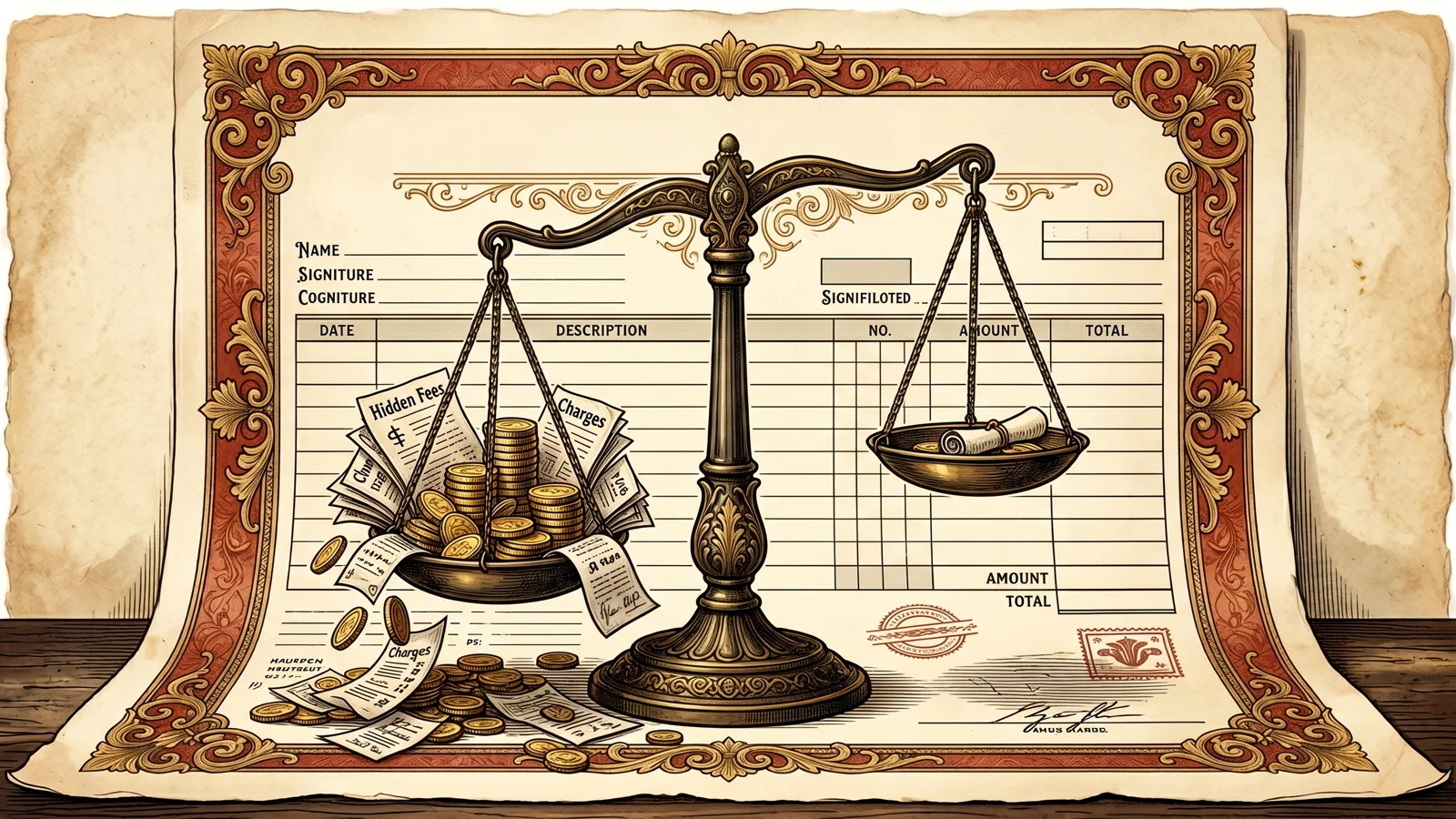
If you own an independent parking lot with 20 to 150 spaces, you have almost certainly been pitched by one of a small handful of vendors: WPS ParkID, TIBA Parking, Amano McGann, Flash Parking, or a regional reseller like Ber-National Automation (BNA) out of Rochester, NY. You got a proposal. The first page had a number that looked reasonable. Twelve months later, your total spend was 40 percent higher than that number.
You are not bad at negotiating. You ran into a playbook — the same playbook used by every parking access and revenue control (PARCS) vendor operating in the independent-lot segment. This article names the plays, shows the exact contract language to look for, and tells you how to walk away without a lawyer.
Why the bait-and-switch exists in the first place
Parking software is sold by two different motions. At the top of the market — airports, municipalities, universities — there is a procurement department. Proposals get legal review. Escalators get negotiated out. Master service agreements get redlined.
At the bottom — independent surface lots, small garages, a guy named John who owns three lots in upstate New York — there is no procurement department. There is a lot owner staring at a quote on a Wednesday afternoon, trying to figure out if $7,000 a year is a good deal. The vendor knows this. The reseller, who earns a 20–30% margin on top of the vendor's own price, really knows this.
The result is a segment where the printed price is the anchor and the real price lives in clauses 7, 12, 14, 18, and Exhibit C. That is where the bait-and-switch lives. Below, the ten patterns we see most often, with examples drawn from real proposals and real contracts.
Tactic 1: The base license decoy
A proposal opens with "BankTheLot [competitor] ParkID Base Software License — $4,200/year", printed large. Underneath, in smaller type: "plus applicable modules and services."
The base license does almost nothing on its own. It gives you entry and exit logging, a rate card, and a basic report. To actually run a lot you need:
- The Payments Module — $900 to $1,800/yr. Without it, you cannot take a credit card.
- The Reporting Module — $600 to $1,200/yr. Without it, nightly revenue reports do not exist.
- The Support Tier — $900 to $2,400/yr. "Standard support" means 48-hour response. "Premium" means you get a human on the phone same-day.
- Permit Management — $600/yr. Needed if you sell monthly passes.
- Multi-rate / event pricing — $400 to $1,000/yr. Needed to charge more on game nights.
By the time you add the modules any real operator needs, the $4,200 base is $8,000 to $9,500. The proposal never shows that total unless you ask. When you ask, the reseller says "let me put something together" and comes back with a "bundle discount" that just brings the number down to what the number always should have been.
Tactic 2: Compulsory upsells sold as optional
A related trick: modules are labeled "optional" on the rate sheet, but the system will refuse to perform the function without them. The permit module is "optional" — except you cannot issue a monthly pass without it. The reporting module is "optional" — except nightly email reports require it.
If it is mandatory for basic operations, it is not optional pricing. It is a decoy. On every proposal you evaluate, ask the vendor: "What is the fully-loaded annual cost for a running lot, with payments, reports, permits, and same-day support included?" Then compare that number to our flat pricing.

Tactic 3: Per-transaction fees on top of your processor
Here is the move that quietly costs the most money. Your payment processor — Stripe, Square, Elavon, Fiserv, whoever — charges you 2.6% + $0.10 per swipe. That is a cost of doing business and it is fine. Some parking vendors add their own per-transaction fee on top, in the range of $0.05 to $0.25 per transaction, routed to the vendor, not the processor.
On a 100-space lot doing 300 transactions a day, that is 109,500 transactions per year. At $0.10 per transaction, that is $10,950 per year — a second software bill, invisible on the front page. You never see it as a line item. You only see it as reduced margin on your monthly P&L.
Ask every vendor: "Does your contract add any per-transaction fee beyond what my payment processor charges? Show me the clause." If they say "sometimes" or "it depends on the package", the answer is yes. BankTheLot charges exactly zero per-transaction fees. Ever.
Tactic 4: The auto-renewal cliff
Every parking software contract we have read contains an auto-renewal clause. The language is remarkably consistent:
"This Agreement shall automatically renew for successive one (1) year terms unless either party provides written notice of non-renewal no less than ninety (90) days prior to the expiration of the then-current term, delivered by certified mail to the address set forth in Section 1."
Miss the 90-day window by a single day? You are locked in for another year. Forgot the contract anniversary was April 12 and emailed on January 15? Renewed. Sent the notice by regular mail instead of certified? Renewed. This is not an accident. This is the single most profitable clause in the industry.
What to do: put the anniversary date, minus 120 days, into your calendar the day you sign. Use certified mail. Keep the green card. If the vendor refuses to confirm receipt, follow up with email too. Belt and suspenders.
Tactic 5: The CPI-plus escalator
Buried in Section 12 of most agreements: "Fees shall increase annually by the greater of three percent (3%) or the Consumer Price Index for All Urban Consumers, plus two percent (2%)."
That is not three percent. In a year with 4.5% CPI, that is 6.5% per year, compounded. A $7,000 contract becomes $7,455, then $7,940, then $8,456, then $9,006 — and you have received no new features, no new support, no hardware upgrade. Just a higher bill.
Over five years, a CPI+2 escalator on $7,000 totals $40,860 versus $35,000 at flat pricing. That's $5,860 of pure escalator revenue the vendor earns for doing nothing. On BankTheLot we write "no price increases, ever" into the contract and back it with source-code escrow.
Tactic 6: The data hostage clause
The most expensive switching cost is not money — it is data. Your permit holders, your transaction history, your rate card history, your gate telemetry. Three years of operational learning. The contract language we see most often:
"Upon termination, Licensee may request an export of transactional data, subject to a reasonable processing fee and a delivery window of up to one hundred eighty (180) days. Data format and schema shall be determined by Licensor in its sole discretion."
Translation: you want your own data back, you pay a fee, you wait six months, and you get it in whatever format is most painful to import into a replacement. That's not a service. That's a hostage.
BankTheLot exports everything to CSV and raw SQL in one click. We also offer source-code escrow — a copy of our controller source code held by a third-party escrow agent, released to you if we go out of business or fail to support the system. If we get hit by a bus, you still have the lot.
Tactic 7: Hardware lock-in dressed up as "integration"
The vendor tells you their software only works with their printers, their readers, their cameras. This is almost never true at the protocol level — it is true only because the vendor has signed exclusive reseller agreements with those hardware brands and wrote firmware keys to reject third-party devices.
The protocols themselves are open:
- Wiegand 26/34-bit — universal for card and keyfob readers since the 1980s.
- RS-232 — universal for ticket printers and spitters, used by Global Entry Tech, IPSolutions, Parking BOXX, and everyone else.
- Dry-contact relay — universal for gate arms from Magnetic Autocontrol, FAAC, HySecurity, LiftMaster, Automatic Systems, and every other brand you will ever see.
When a vendor says "you need new hardware", they mean "our software won't talk to the $18,000 of equipment you already own". BankTheLot talks to all three protocols natively. If your gate has a relay and your printer has a DB-9 serial port, we drive them.
Tactic 8: The reseller markup ladder
If you are buying from BNA, or any regional reseller, you are paying the vendor's wholesale price plus 20 to 30 percent. That is not inherently wrong — resellers do real work: training, installation, on-site support. But the markup is invisible to you, and the incentives are misaligned in two ways:
- The reseller makes more money the more modules you buy. They will not tell you which modules you do not need.
- The reseller makes a recurring commission on your renewal. They will not tell you how to time a non-renewal notice correctly.
If your current bill is coming from a reseller and not directly from the vendor, you are almost certainly paying a premium. Ask for the vendor's direct list price. It will not be volunteered.
Tactic 9: Support-tier manipulation
Standard support: "48-hour email response." Premium support: "same-day phone response, 8am–6pm ET." Enterprise support: "24/7 hotline, guaranteed four-hour on-site response."
Standard support is functionally useless for a parking lot. If your gate is stuck at 7pm on a Friday and the response window is 48 hours, you are hand-issuing paper tickets all weekend. So you buy premium. Now you are at $9,000 a year instead of $7,000.
This is not a support tier structure. It is a mechanism to make the bottom tier unusable so you feel forced to pay for the middle tier. At BankTheLot, there is one support tier. You call one phone number. A person answers. No "tier-2 escalation roulette".
Tactic 10: The remote kill switch
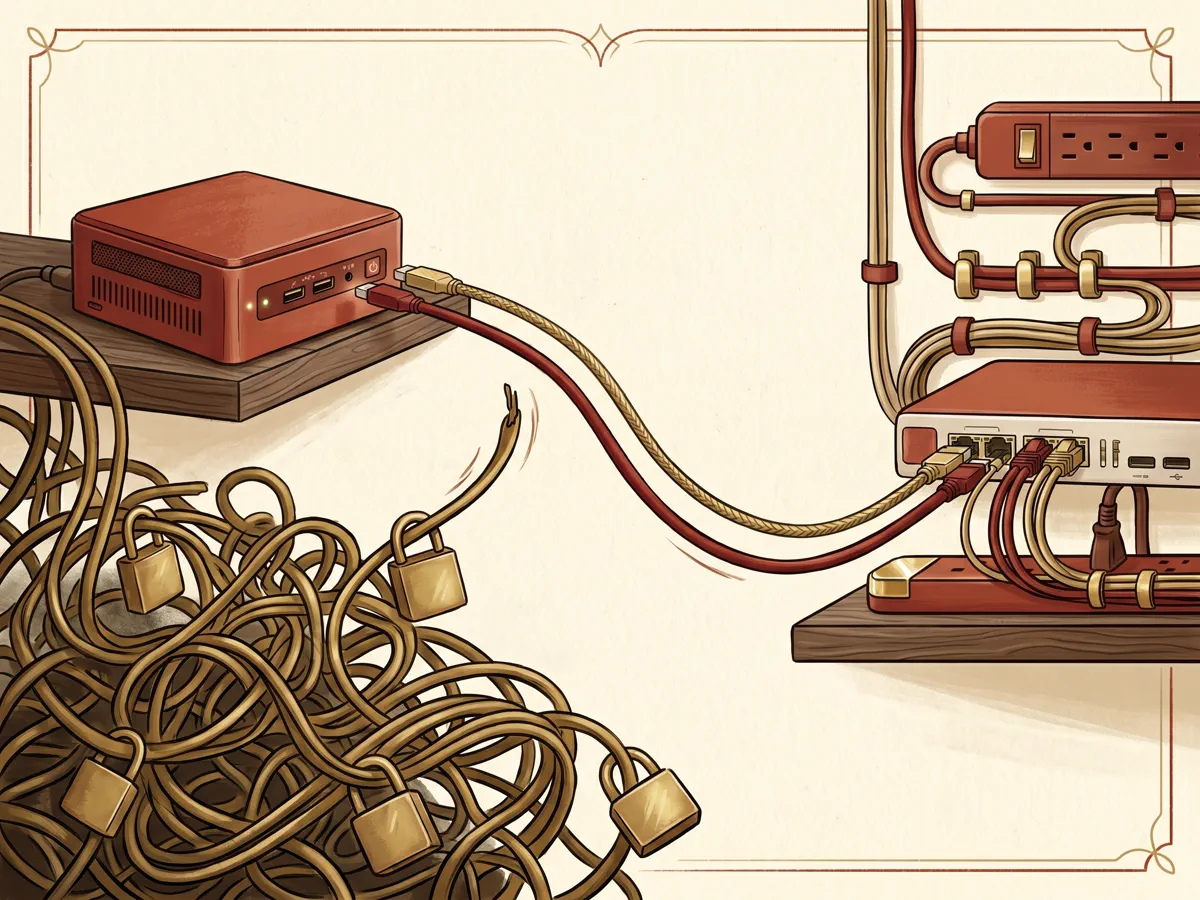
Most modern PARCS controllers phone home to a cloud license server. If you stop paying the annual support fee — even if the software itself is paid for — the vendor can disable the system remotely. Gates default to open, or default to closed, depending on the vendor's "failure mode" setting. Either way, you are not running a lot.
Relevant contract language:
"Licensor reserves the right to suspend access to the Licensed Software in the event of non-payment of any fees, breach of this Agreement, or at Licensor's discretion upon thirty (30) days' written notice."
The phrase "at Licensor's discretion" is the point. It is not tied to non-payment — it is tied to the vendor's choice. BankTheLot runs entirely on-premise. There is no phone-home license server. If our cloud goes away, your lot keeps running. If your internet drops, your lot keeps running. The only thing that can turn BankTheLot off is unplugging the mini-PC.
How to escape cleanly (the 5-step exit)
- Find your contract and read Section 12 (renewal) and Exhibit A (fees). Mark the auto-renewal notice deadline — usually 90 days before the anniversary date. Put it on your calendar with a 30-day and 7-day reminder.
- On that deadline, send a non-renewal letter by certified mail. One paragraph: "Pursuant to Section X, this letter provides written notice of non-renewal of Agreement dated [date]. The Agreement shall terminate on [anniversary date]. Please confirm receipt."
- Export your data the same week. Permit holders, transaction history (last 24 months at minimum), rate card history, voided transactions, refunds. If the vendor refuses, cite your state's data-portability laws (most states now have one).
- Book a BankTheLot install for the week after your contract expires. We arrive at 9am, the lot is live again by noon. Your gates, printers, readers, and loops stay exactly where they are. If anything fails the rollback is five minutes — we just put the old controller back.
- Keep the old controller in a cabinet for 90 days as insurance. You will never need it. But sleep is cheap.
What the right contract looks like
A fair parking software agreement fits on two pages. It has no auto-renewal, no escalator, no per-transaction fee, no module ladder, no data-export fee, and no kill switch. It reads something like:
"Customer pays $3,000 per year in advance. All features included. Customer owns their data and may export at any time in CSV or SQL format at no cost. Either party may terminate at the end of any annual term by providing 30 days' written notice. Upon termination, the last version of the software paid for continues to run indefinitely on Customer's on-premise hardware. Source code for the controller is held in escrow with [third-party agent] and released to Customer if Vendor ceases operations, is acquired, or fails to deliver committed support for 30 consecutive days."
That is the BankTheLot contract, in substance. One flat number, everything included, 90-day money-back, no clauses that exist to trap you. The rate is $2,400 to $3,600 per year depending on tier. Compare it to what you are paying now and email us a picture of your current cabinet — we will quote the brain swap on the same day.
The punchline
Every tactic in this article exists because the parking software industry calculated, correctly, that independent lot owners would not read the contract. The whole business model is downstream of that bet. The first vendor to lose this bet — to show up with flat pricing, no upsells, full data portability, and a contract that fits on one page — takes the segment. We intend for that to be us.
If you are currently paying a number that starts with a 7 or an 8 to run a lot that a mini-PC could run for $3,000, you already know what the right answer is. You are just waiting for someone to make the switch cheap enough. It is.
Frequently asked questions
What is a parking software bait-and-switch?
It is the gap between the price on the first page of the proposal and the total first-year cost you actually pay. Vendors advertise a base license fee — often $3,000 to $5,000 — and then layer on mandatory modules (payments, reporting, surge, support), per-transaction fees, installation, training, hardware markup, and annual escalators written into the contract. The "bait" is the headline number. The "switch" is everything the contract compels you to buy once you've signed.
Which parking software vendors are most known for bait-and-switch contract tactics?
The pattern shows up across most PARCS incumbents and their resellers: WPS ParkID (and its reseller network including Ber-National Automation / BNA in Rochester NY), TIBA Parking, Amano McGann, Flash Parking, Parker Technology, DESIGNA, and SKIDATA. It is not unique to any single brand — it is an industry playbook that independent lot owners face because they lack the legal review budget of municipal or airport buyers.
How do parking vendors lock owners into multi-year contracts?
Three mechanisms: (1) auto-renewal clauses that extend the contract for another 1–3 years unless you send certified written notice 90+ days before the renewal date; (2) data hostage terms that require you to pay a "data export fee" or give 180 days notice to retrieve your own transaction history; and (3) remote-kill features that let the vendor disable your software if you stop paying support fees, even when you own the license.
Are annual price increases legal in parking software contracts?
Yes, and they are almost always written in. The standard contract includes a "CPI plus" escalator — usually CPI + 2% to CPI + 5% — applied every renewal. Over a 5-year window that means a $7,000/yr contract can quietly become $9,500/yr, even with no new features added. Read section 12 or 14 of any proposal carefully.
What is the fastest way to escape a WPS ParkID or BNA contract?
You do not have to break the contract. You let it run out and refuse to renew — but you must give written notice before the auto-renewal window closes. Typically 90 days before your anniversary date, by certified mail, to the exact address in the contract. On the same day, export every transaction, permit holder, and rate card to CSV. Then swap the brain. BankTheLot installs in 60 to 90 minutes using your existing gates, scanners, and printers — hardware kit runs about $465.
Can I keep my gate arms and ticket printers when I switch parking software?
Yes. Ninety-five percent of "proprietary" PARCS hardware speaks one of three standard protocols: Wiegand, RS-232, or dry-contact relay. BankTheLot's controller reads and writes to all three. You keep your Magnetic Autocontrol gates, your Global Entry Tech ticket spitters, your Nayax or Ingenico readers, and your vehicle loops. The only thing that changes is the mini-PC in the cabinet.
How much can an independent parking lot owner save by switching away from WPS ParkID?
A lot paying $7,000 per year to WPS ParkID (or a reseller marking up that contract by 20 to 30 percent) can drop to roughly $3,000 per year flat, with no per-transaction fees and no upsell modules. Over five years that is a difference of around $20,000 — before you count the revenue lift from automatic surge pricing, which typically adds another 18 to 34 percent on event days.